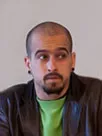
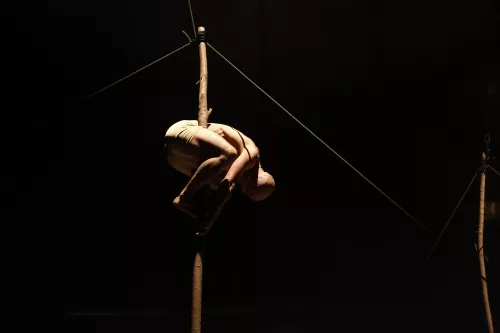
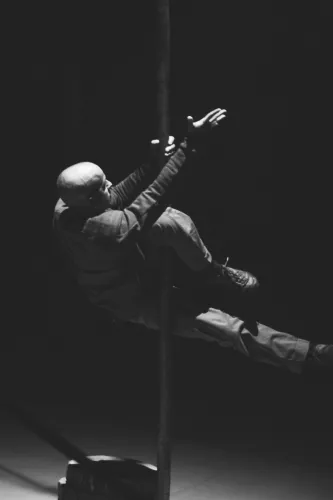
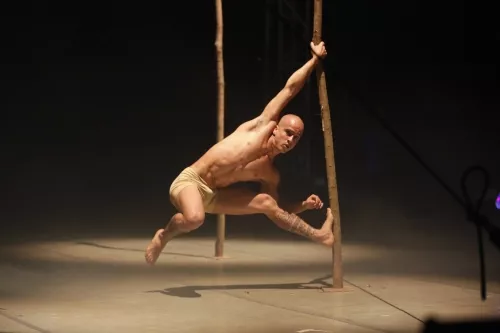
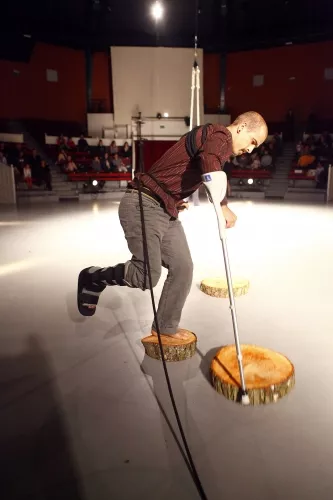
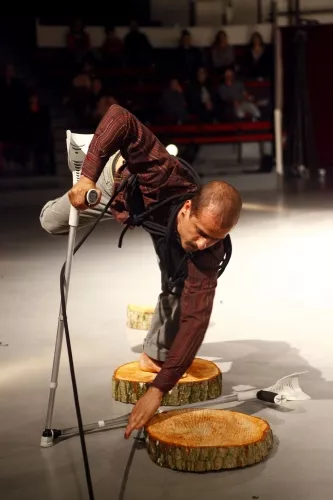
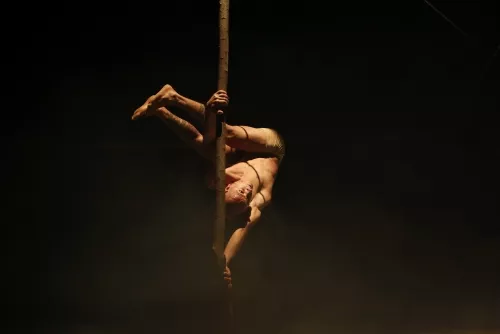
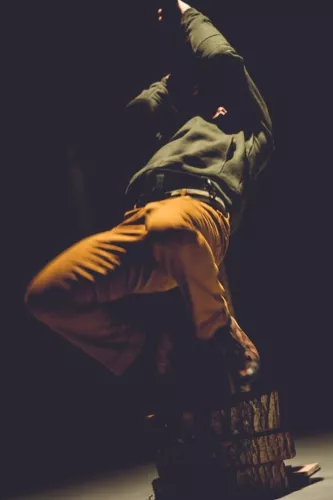
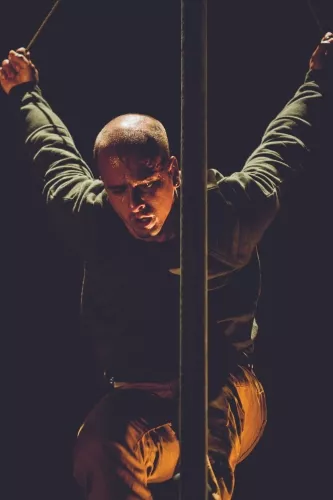
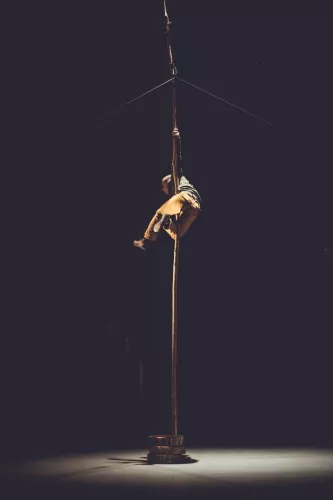
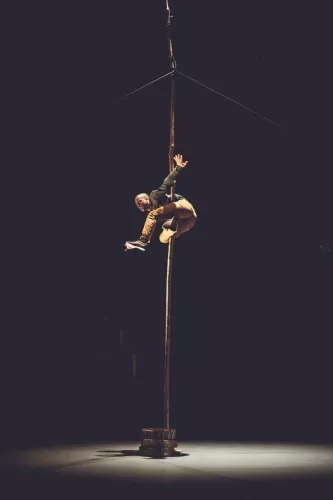
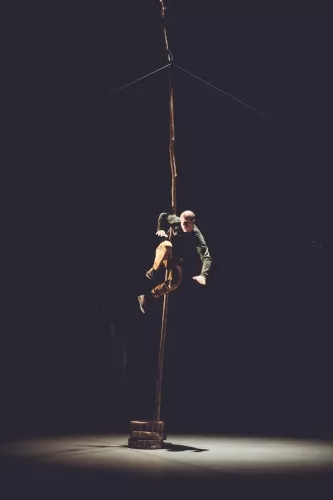
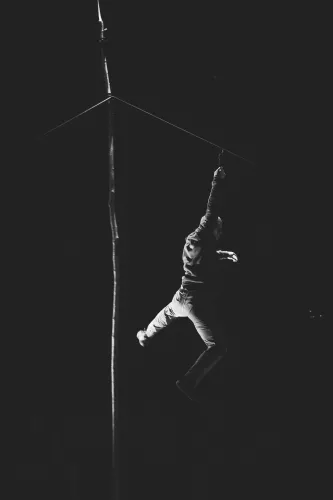
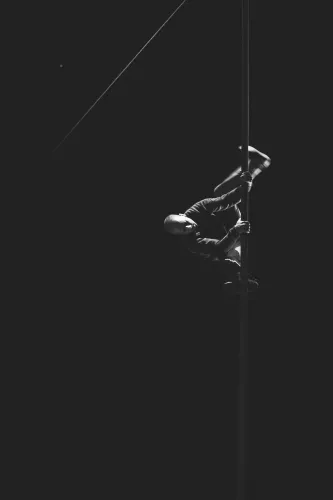
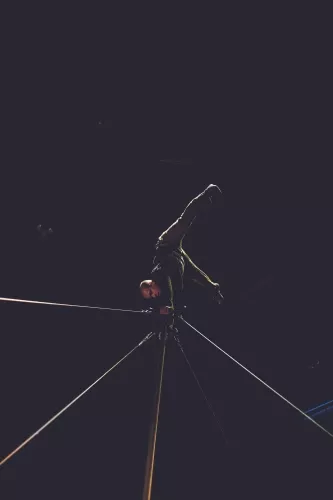
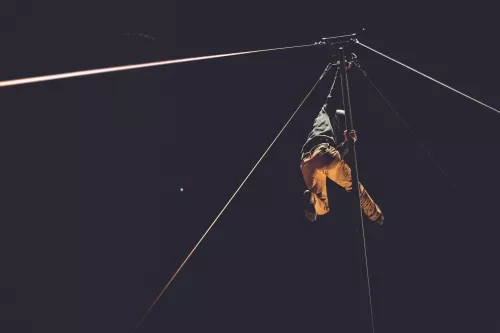
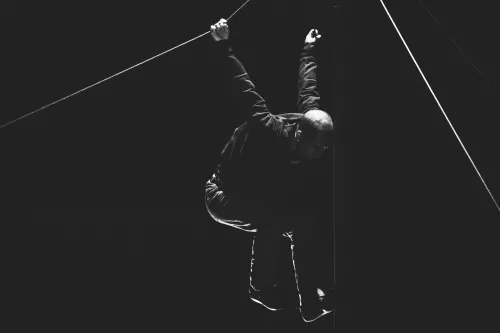
A passionate capoeira practitioner, circus artist, creator/performer, and performer.
From a very young age, Philippe has been deeply attuned to nature and passionate about adventure sports. He later became an instructor in rafting, rock climbing, and canoeing. He enjoys rigging and working at heights. In 2005, he undertook a 65-day canoe expedition on the Rio São Francisco, the longest river in Brazil, during which he performed juggling acts in small riverside villages. It was there that he decided to “dedicate” his life to the circus.
At age 17, he discovered the circus through the social circus group Circo De Todo Mundo. He practiced juggling there for years. In 2006, he completed professional circus training at the SPASSO Escola Popular de Circo in Belo Horizonte, Brazil. At the same time, he studied visual arts at the State University of Minas Gerais—Escola Guingnard. He then joined the National Center for Circus Arts (Cnac), where he completed his studies in 2013–2014.
In 2009, he created and developed the circus project “Circo Fusca,” using a vintage “Beetle” car. Together with another circus artist, he traveled twice through remote areas of the state of Minas Gerais. The inhabitants of these regions, deprived of everything and unfamiliar with culture and art, were thus introduced to live performance, particularly the circus.
In 2010, he also co-authored the book “Pedagogia das Atividades circenses” with Marco Bortoleto, contributing the chapter on the Chinese pole.
Philippe Ribeiro has presented the acts “In-constance” and “Sertões de Rosa” at festivals in Brazil—notably the Festival Mundial de Circo do Brasil—as well as in Argentina and Europe. He also participated in the “Fibonacci” project produced by the Quebec-based company Les 7 doigts de la main in Argentina.