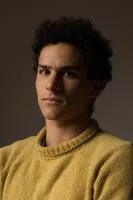
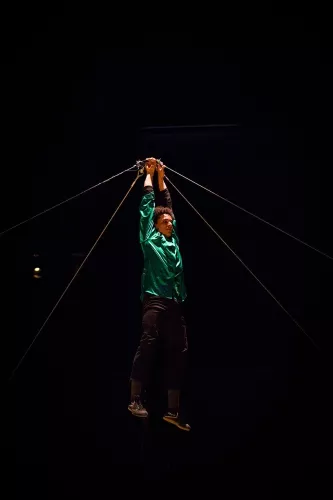
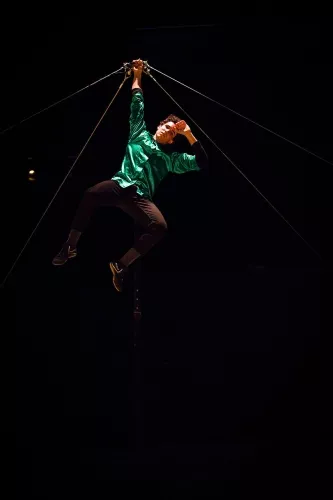
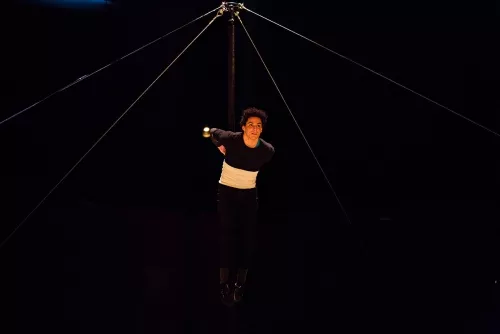
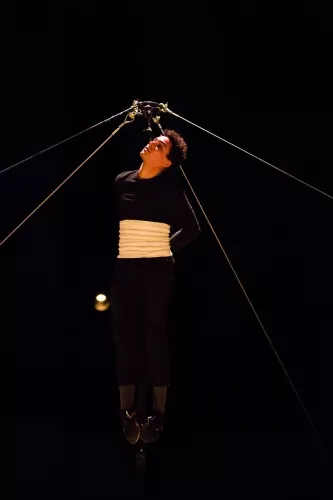
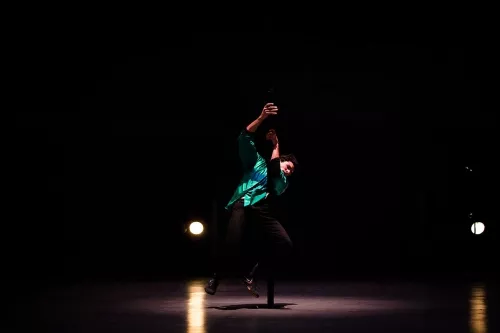
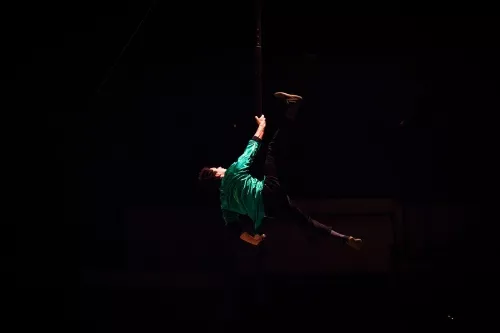
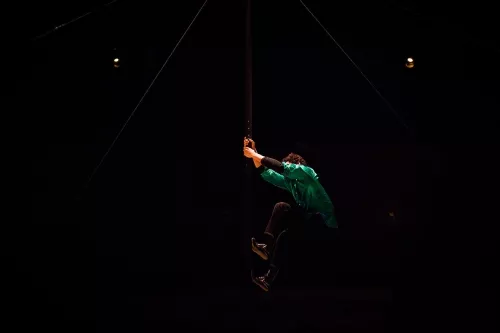
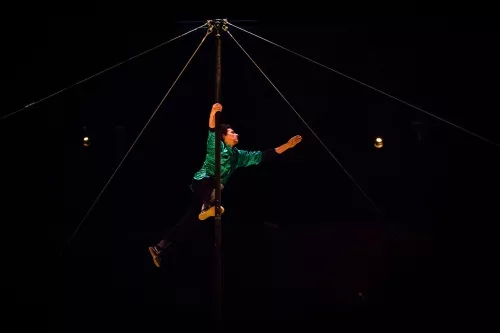
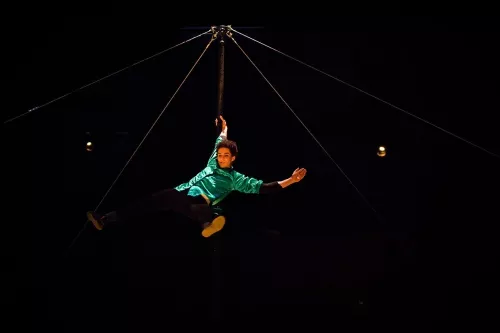
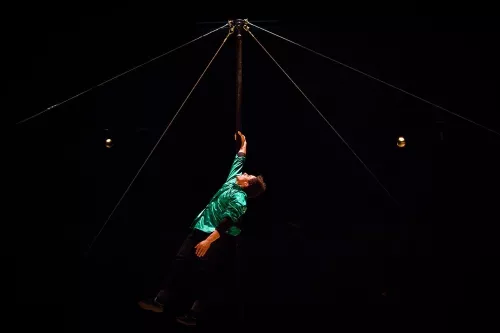
Léon grew up in Switzerland, not far from the mountains, where he played circus when it was not snowing and explored the peaks from top to bottom. After finishing high school, he initially wanted to become a mountain guide; he was therefore advised to pursue higher education. He followed this advice and enrolled at the Université de Lausanne. During his studies, he practiced circus, wrote a few articles, engaged in progressive political movements, and continued to explore the surrounding mountains.
In 2014, he obtained a Bachelor’s degree in Environmental Science and decided—quite logically—to become a circus artist.
This time, Léon did things on his own terms. He moved to Fribourg, where he taught acrobatics in an amateur circus school. Together with three friends, he founded a company that allowed them to tour a show for three summers.
In 2015, he was accepted into the FLIC Scuola di Circo in the Korean cradle specialization. There, he met Teresa Noronha Feio, Francesco Sgrò, and Riccardo Massida, whose influence stimulated his reflections on how he practices and thinks about circus.
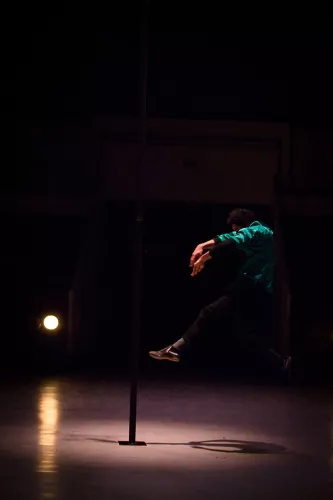
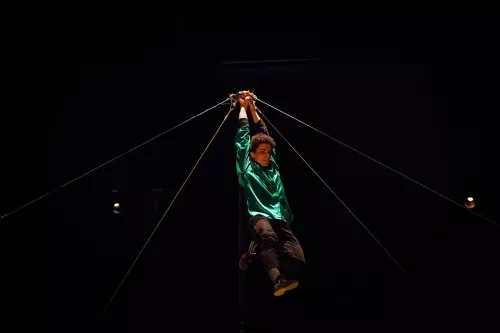
After one year, frustrated by the repetitive gymnastic nature of the Korean cradle, Léon shifted toward Chinese pole, determined not to follow straight lines and to keep experimenting.
After these two years in Italy, Léon applied to the Centre national des arts du cirque, where he was directly admitted into the third year. There, he continued his acrobatic and dance research on Chinese pole while also taking part in collective partner acrobatics and occasionally returning to Korean cradle for a few flights.