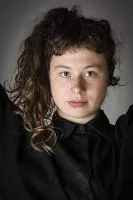
Léa was born on October 4, 1993, in Paris, France.
Inspired by her father, a guitarist, she began playing the cello at the age of eight at the conservatory of the 10th arrondissement. She then entered the Collège Rognoni for performing arts students, where she studied academic subjects in the morning and dedicated her afternoons to music.
Alongside this, she practiced gymnastics for three years, developing a strong interest in floor acrobatics and uneven bars, while strongly disliking vault and balance beam.
At 16, she enrolled in amateur acrobatics classes at the Académie Fratellini as well as at La Grange aux Belles.
At 17, after earning a literature-focused baccalaureate with a music option, she entered the Sorbonne to study Modern Literature with the goal of becoming a writer. After several grammar and phonetics courses, Léa realized she had made a mistake and would not write her stories at the Sorbonne. She left university after three months, emotionally low, and went through a difficult existential period before being hired as a waitress in a bar-restaurant in Montreuil, where she worked for five months.
Her friends eventually convinced her to apply to preparatory circus schools, and she was accepted at the Centre des arts du cirque Balthazar in Montpellier. She trained there for two years in partner acrobatics, although her dream was to practice Russian swing or floor acrobatics.
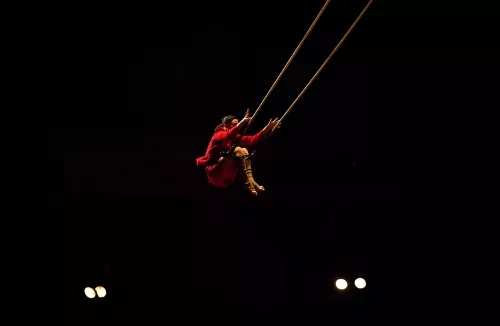
She then entered the École nationale des arts du cirque de Rosny-sous-Bois in 2014, where, instead of Russian swing and trampoline, she was placed on a flying trapeze at 7 meters high. She did not particularly excel in this discipline, as her acting skills were difficult to express at such a height. She was therefore sent to theatre workshops at ESAD and Le Samovar. She saw this as an opportunity to deepen the relationship between circus and theatre, and perhaps to combine clowning and burlesque.
In her first year at the Centre national des arts du cirque, she also followed a “lifelong training” program in clowning, where she met Cédric Paga, Paola Rizza, and Adèle Nodé-Langlois, who left a lasting impact on her artistic journey.
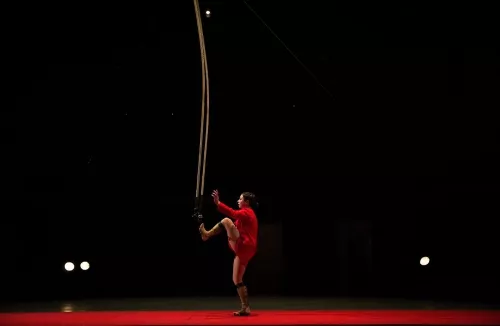
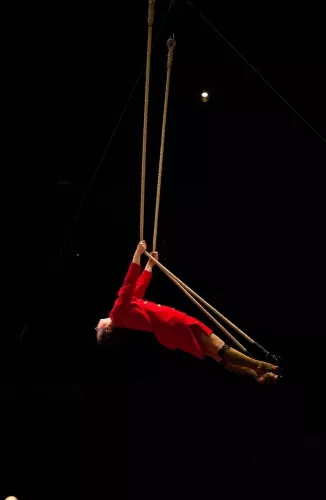
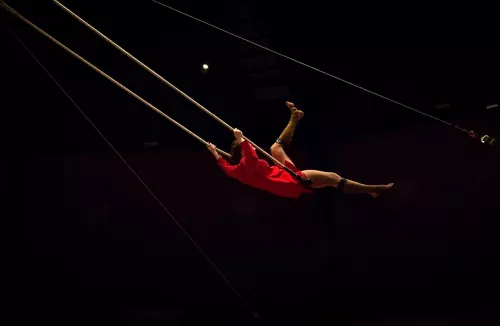
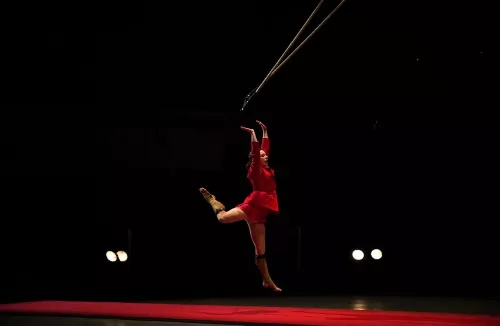
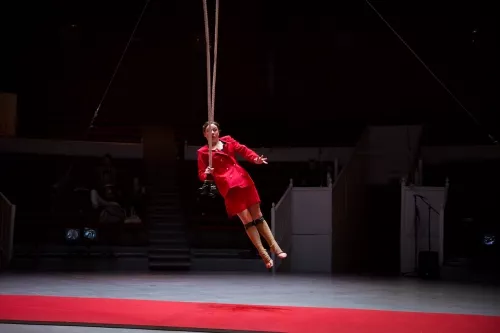
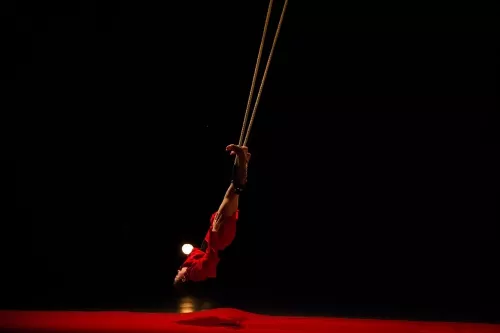
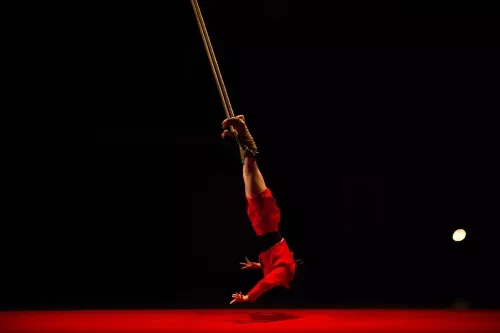
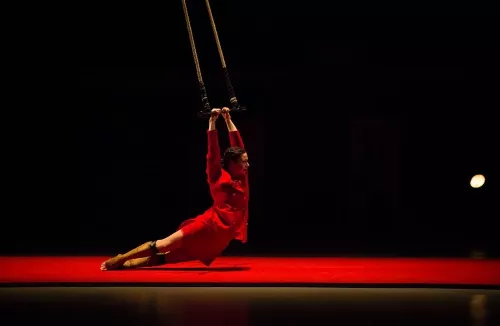
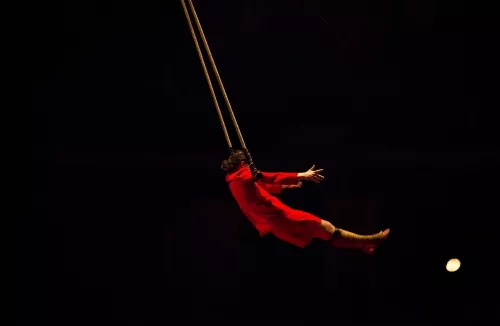
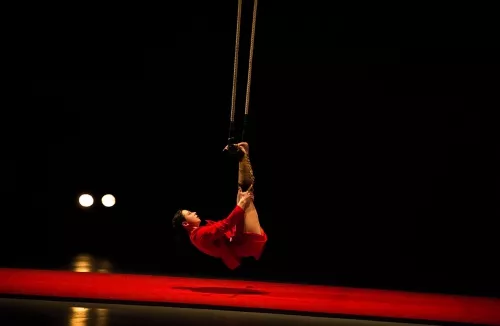
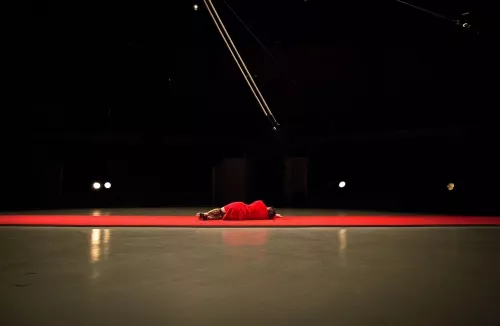
In 2016, on the advice of her director Gérard Fasoli, she lowered her flying trapeze to chest height. This marked the beginning of her practice of low flying trapeze, where anything became possible: being closer to the ground allowed her to swing without a harness, to fully express her theatrical potential, to move freely on the floor, and to develop a vocabulary blending aerial and acrobatic disciplines, with the support of her teacher Marie Seclet, who accompanied and trained her throughout her project.