He discovered circus arts at the leisure school “Fuma Che ‘Nduma” in his small hometown of Cuneo.
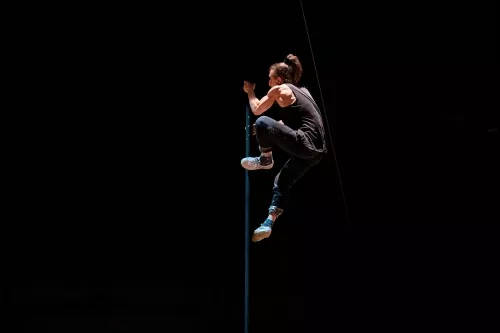
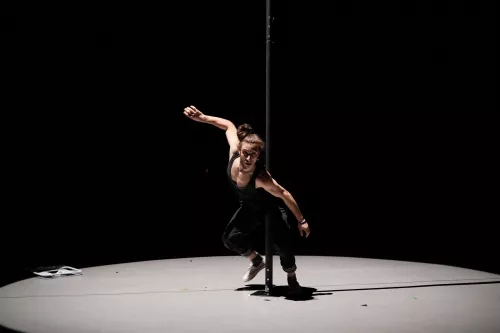
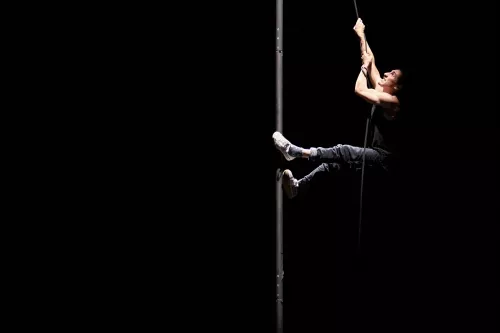
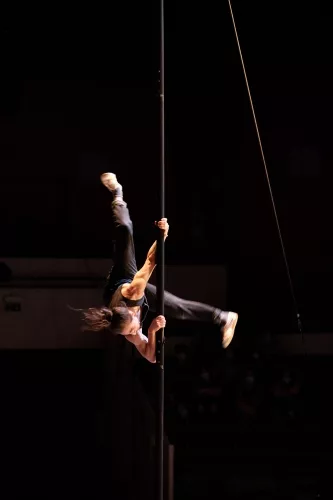
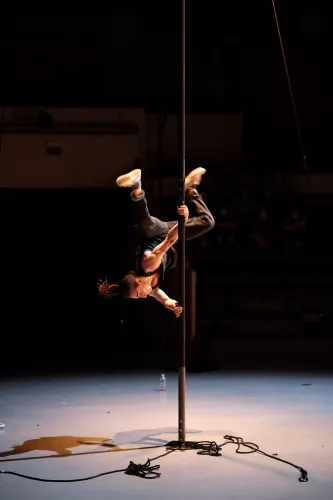
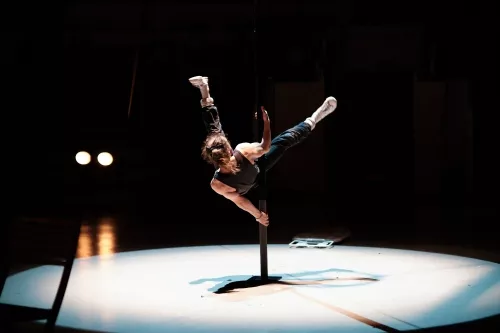
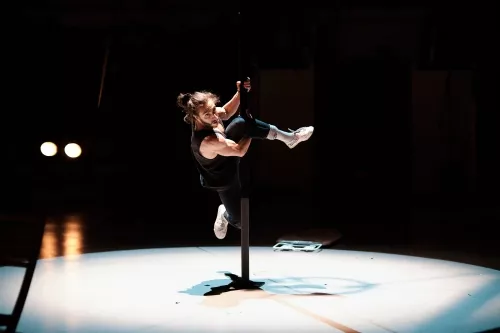
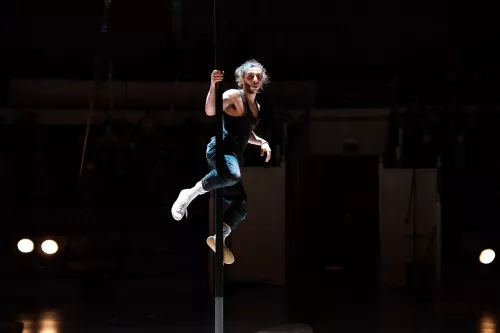
After studying industrial mechanics, he enrolled at the FLIC Scuola di Circo to pursue more advanced circus training. Despite his interest in acrodance—discipline not taught there—he specialized in the Chinese pole.
Alongside this, he nurtured his passion for dance and acrobatic gymnastics by attending classes at the schools “Farco Morra” and “Reale Società Ginnastica” in Turin.
His training allowed him to work on various projects and creations and to meet Italian directors such as Francesco Sgrò, Roberto Magro, Marianna De Sanctis, Riccardo Massidda, as well as French artists like François Juliot and Florent Bergal. He also took part in several festivals.
In 2018, he joined the program of the Centre national des arts du cirque, first spending a year under the big top in Rosny-sous-Bois, where he absorbed performances and developed his artistic awareness. He worked with directors such as Fanny Coindet, the collective MiRR, and Pierre Rigal.
In 2019, he discovered the facilities of the CNAC in Châlons-en-Champagne, where despite challenges caused by the pandemic his cohort participated in the repertoire revival of Fournaise, directed by Gilles Cailleau and presented at the CIRCa Festival in Auch.
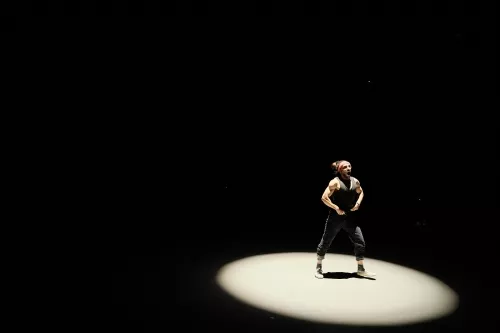
He considers being on stage a privilege for any student or artist. It is an opportunity to be seen and heard, but also a responsibility toward the audience. That is why he favors references that are accessible to everyone, aiming to create a simple and shared connection with the public. He strives to always move toward clear, straightforward forms of representation, regardless of the language used.
For him, circus is at once art, play, entertainment, and encounter—open to all and for all.
 Centre National des Arts du Cirque