
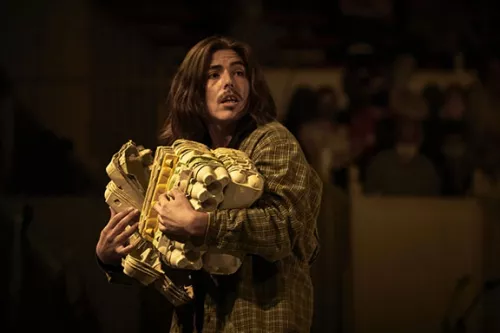
Alberto was born on March 8, 1994 in Santiago, Chile, in a large valley dominated by the Andes mountain range.
During adolescence, he practiced skateboarding for four years, which allowed him to combine speed and bodily precision. This introduction to risk-taking, and the pleasure he derived from it, encouraged him to continue exploring and expanding his physical expression, both on the ground and with apparatus.
In 2011, he took part in a student occupation of his high school for eight months, as part of the second major national student movement in the post-dictatorship era. This experience changed his perception of reality and his way of acting within it, aligning with his desire to contribute to change in his country. During the same year, he explored other forms of bodily expression through juggling, using balls, rings, clubs, devil sticks, bolas, and contact balls.
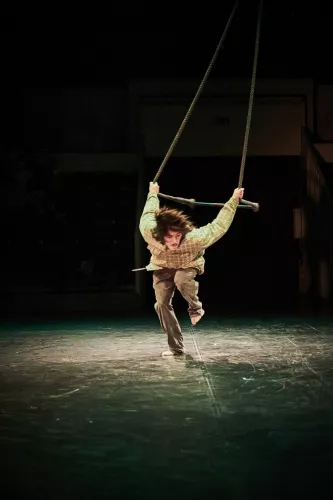
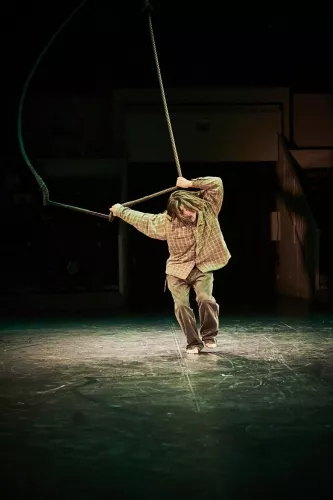
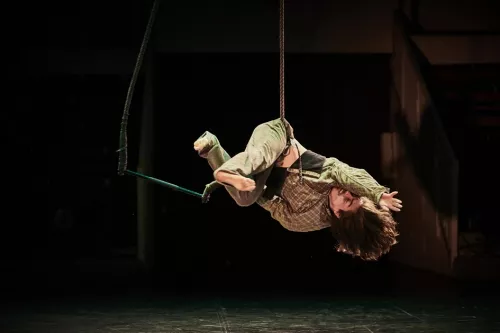
The following year, he had the opportunity to train in the workshop of Cristian López, trapeze artist and director of the company “Suspension Horizontal,” dedicated to social and political advocacy for the oppressed. It was there that he fell in love with acrobatics, the flexibility it requires, and the apparatus that would become his escape from gravity: the static trapeze.
Alberto continued his training for one year at the “Centro de las Artes Aéreas,” directed by the Balance company. There, he discovered contemporary dance and hand balancing, two practices that challenged his understanding of movement in space and in relation to apparatus.
To combine his civic engagement with his approach to performing arts, he decided to pursue professional artistic training.
In 2014, he began a three-year program at Circo del Mundo in Chile. He questioned how to merge circus and politics. During this time, he found major influences for his future: Álvaro Valdez, his trapeze teacher, researcher, and author in contemporary circus; Agustín Colins, acrobat and performing arts intellectual who deepened his interest in physical theatre and stage writing; and Matías Joshua, contortionist and hand balancer with whom he explored semiotics (the study of signs and meaning) and the codes used in circus. In 2017, he completed this program with the theatre-circus piece La Celebración o el drama del paraíso, directed by Camila Osorio, researcher, educator, and theatre director.
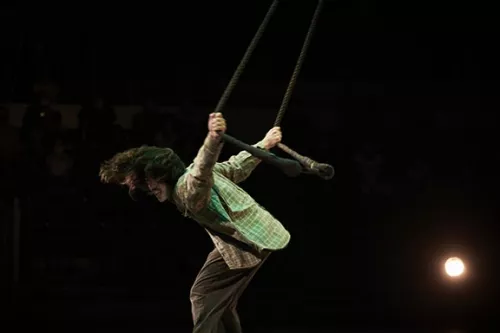
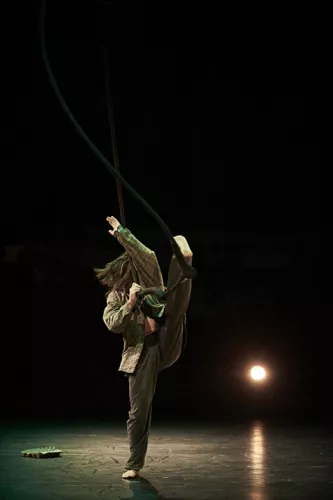
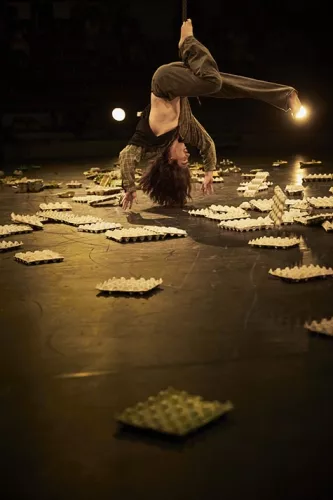
After this experience, Alberto decided to continue his training abroad, specifically in Europe, for the quality of research, development, and creation in contemporary circus. In 2018, he joined the Centre national des arts du cirque, where he developed his practice of static trapeze using a single-point suspension system. This setup allowed him to play with the space between earth and air, and to reconnect with acrobatics, balancing, and contortion.
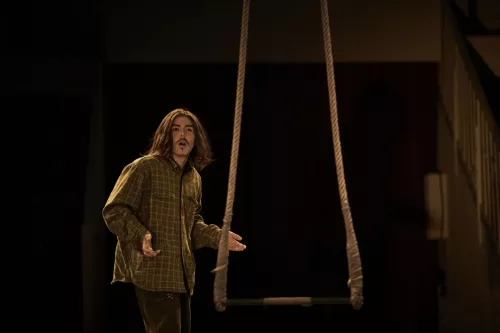
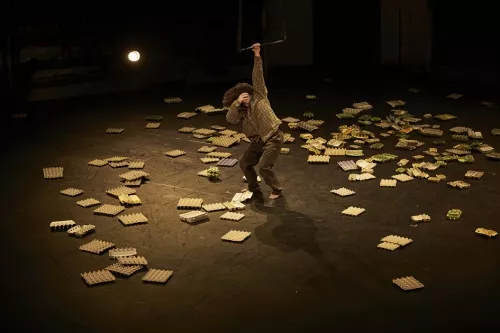
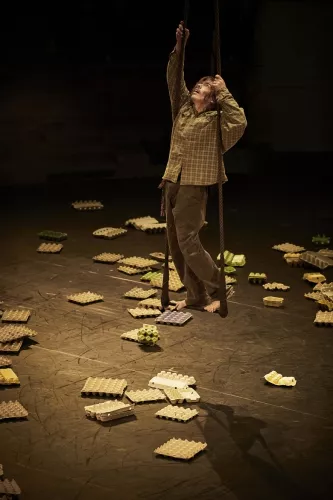
Theatre and dance “inhabit” his physical and bodily expression. The trapeze has become his partner, an autonomous entity with which he shares the stage, debates his ideals, and expresses his Latin American roots.