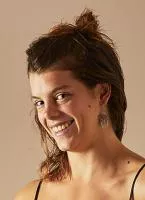
Born in Barcelona on 25 July 1998, Lucía is the child of a German engineer seeking a bohemian life and an Argentine English teacher who came to Europe to pursue her dream. She grows up between wild boars and pine forests, an upbringing shaped by falls that blur the boundaries of vertigo, just outside a large cosmopolitan city.
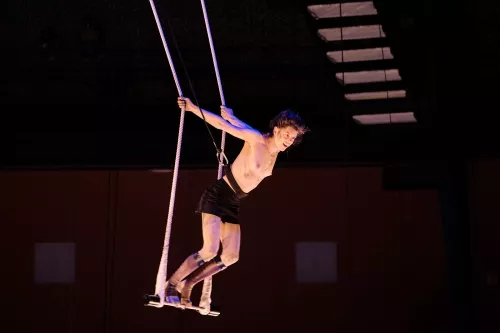
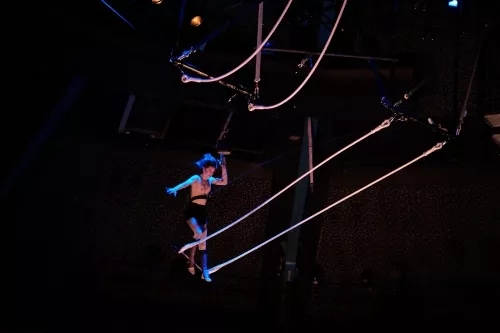
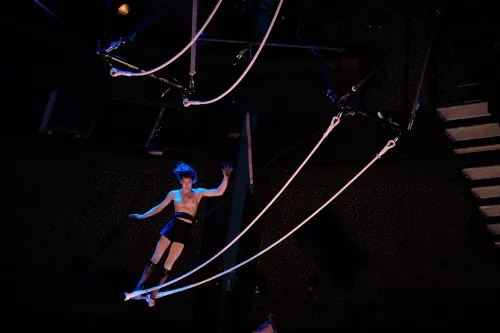
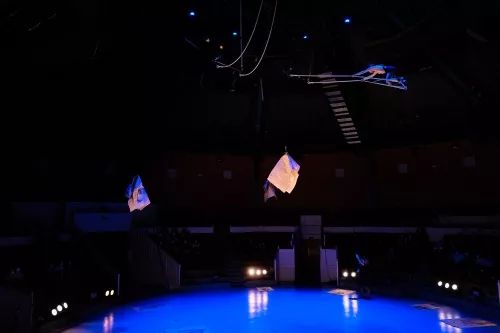
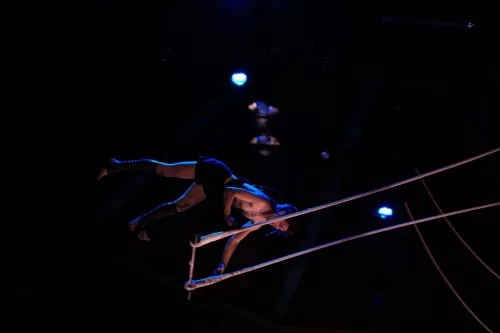
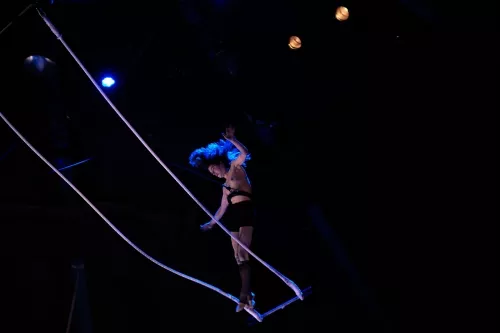
At 16, she joins an art and drawing school to complete her secondary education in the heart of the Raval district, where she discovers “alternative ways of living.” This experience pushes her to apply for the FLIC Scuola di Circo. There, she begins training in the swinging trapeze, experiencing the addictive and sublime sensation of flight and the daily discipline of a circus performer’s body.
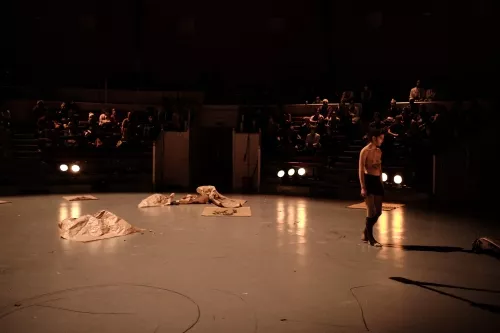
Today, still moving between euphoria and imbalance, Lucía develops a research practice in contortion and the limits of the body. Her work is nourished by encounters with artists such as Roberto Magro, Piergiorgio Milano, Sandra Ancelot, and Gilles Cailleau.
She questions the place of women in society and dreams of creating a collective project with the women she has met along her journey—a project she begins to imagine alongside Federica Pini Sandrelli, another swinging trapeze artist, who also plans to make a short film on the subject with Joanna Betzer.
Alongside this, she develops her other passions such as painting and visual arts, which she intends to exhibit. She also continues her research into the materiality of the body, as well as writing a collection of poems that she illustrates and attempts to “musicalize” through voice performance.
“Circus is for me the way to deny the existence of limits and make room for dreams. It is the place where our real, imperfect bodies confront a total freedom of thought and imagination.”