

Andrés Mateo Castelblanco Suãrez
Washington trapeze, Hand balancing
Colombia
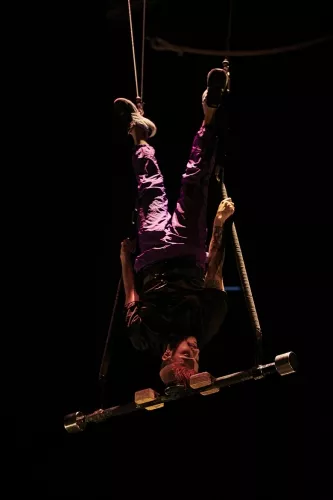
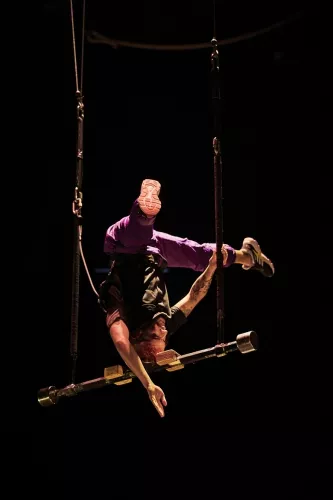
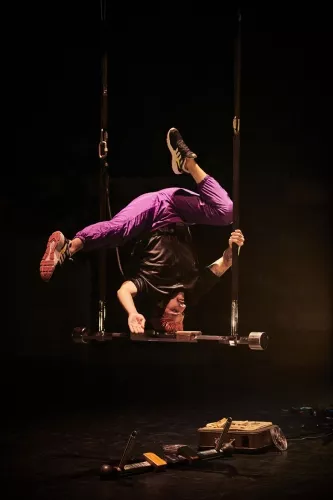
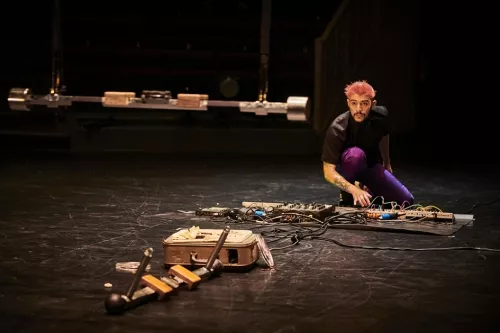
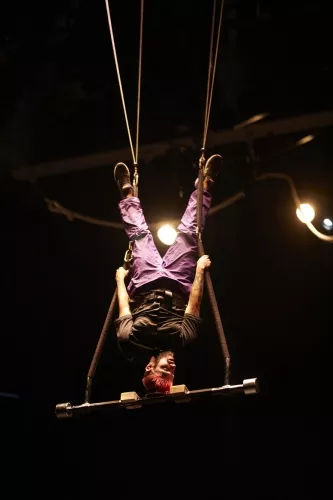
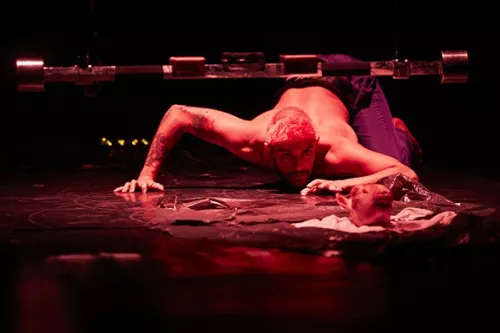
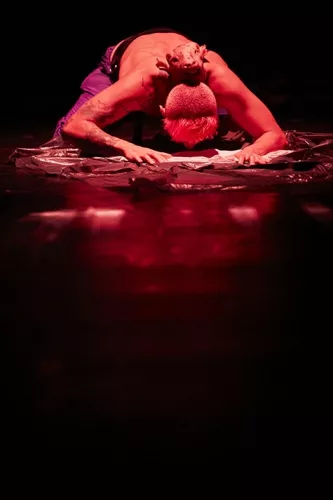
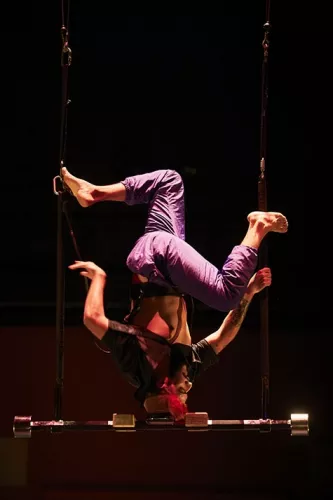
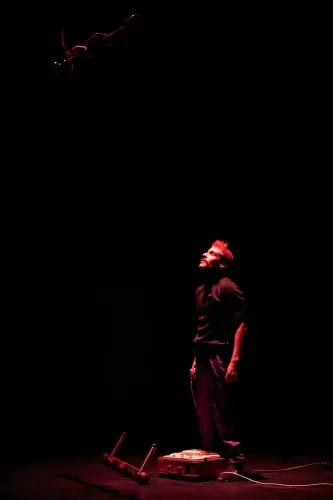
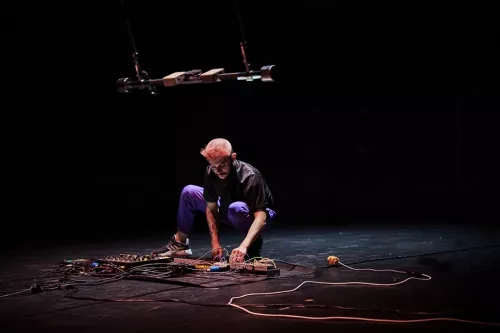
Mateo was born in Bogotá, Colombia, in 1994, during a period when the country was going through political difficulties. For this reason, his family decided to move to a small town in the center of the country.
Colombian culture strongly emphasizes music and dance. From a very young age, he practiced traditional music using instruments such as drums, percussion, and the Colombian bagpipe. His encounter with circus happened by chance in the streets, with very limited access to formal training. Because of this, at the age of 16, he decided to go to Mexico to study for four years at the Escuela de Artes Escénicas y de Circo Julio Revolledo, founded by Julio Revolledo, a major historian of Mexican circus. During this time, Mateo became familiar with circus history and specialized in hand balancing.
He then began working in the Dominican Republic, Mexico, and Colombia with both traditional and contemporary companies such as La Jonglerie, Les 7 Tables, Cirko Cat, La Vitrine, and the Gasca family circus.
Always eager to explore different approaches, he decided to move to Europe and joined the professional contemporary circus school Cirko Vertigo in Turin. There, he discovered and trained for two years in the Washington trapeze, which boosted his adrenaline and focus.
Mateo then continued his training in France, entering the joint ENACR (Rosny-sous-Bois) – CNAC (Châlons-en-Champagne) program at the Centre national des arts du cirque in order to complete his technical mastery while developing his artistic identity and expression. Music has always accompanied him and remains central to his research, which blends traditional and contemporary circus with folk and experimental sounds.
What does circus mean for Mateo?
“Circus cannot be chosen; it is found. It is a ‘visceral’ connection that is born when we are in our mother’s womb and dies with us. Doing circus is playing with destiny. Circus is the circle—it is playing in 360°, like the world turning on itself. It is playing with that movement. Circus has the same history as humanity. Being aware of this allows us to transmit it, like an instinct.”